

With an estimated 30,000 Western Australian properties carrying some level of methamphetamine surface contamination, and fewer than 10% of suspected cases ever reported, the chances of encountering a contaminated home are higher than most people realise.
Whether a property was used as a clandestine lab or simply had a resident who smoked meth indoors, professional decontamination follows a strict, staged process to bring contamination levels below Australia’s residential safety threshold of 0.5 µg/100 cm².
Below is a detailed walkthrough of the seven stages every meth decontamination in Perth project should follow.

The 7 Stages of Professional Methamphetamine Decontamination
Stage 1 – Obtain Approvals and Notify Authorities
Before any work begins, certain properties require formal clearances. If police have identified the property as a former clandestine drug laboratory, local government Environmental Health Officers and WA Health must be notified.
Under the WA Health Guide for Testing and Remediation, properties linked to manufacture are treated differently from those contaminated by use alone. The appropriate authority may issue a prohibition order until remediation is completed and validated.
For rental properties, landlords and property managers also have a duty of care to disclose known contamination and engage a licensed remediation provider before re-tenanting.
What this means for you: Do not attempt to enter, clean, or occupy a suspected meth-contaminated property until approvals are confirmed. The chemicals present, particularly in former labs, can pose serious respiratory and dermal health risks.
Stage 2 – Assess and Test the Property
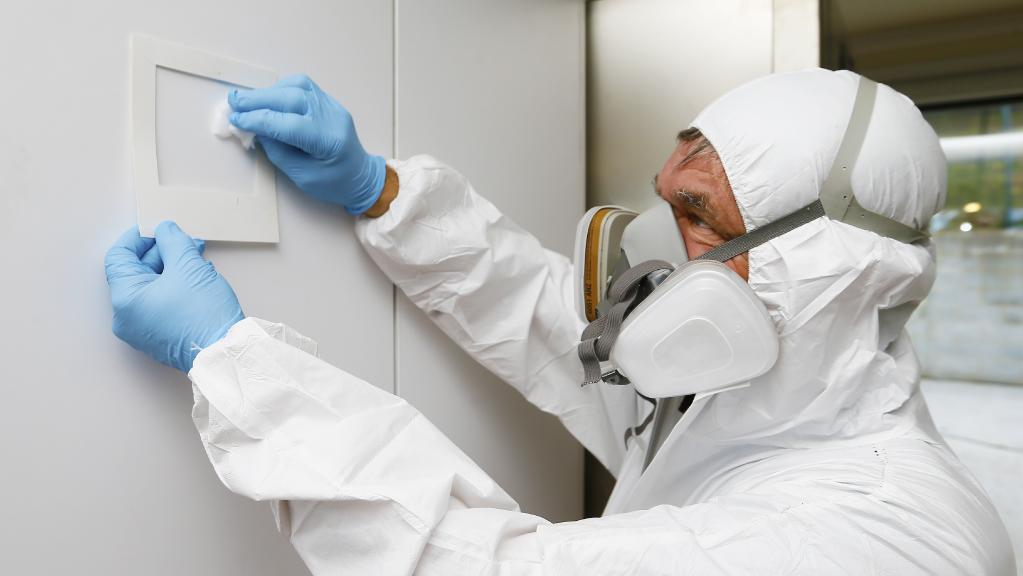
A WA Health–accredited screening company conducts pre-remediation sampling to identify exactly where and how severe the contamination is. Surface wipe samples are collected in accordance with NIOSH Method 9111 using a methanol-dampened gauze wiped across a measured 10 cm × 10 cm area.
Samples are taken from high-contact surfaces in every occupied room: benchtops, light switches, door handles, walls, window sills, and ventilation outlets. Kitchens and bathrooms typically receive double the sampling density, as meth residue penetrates porous building materials in these areas more aggressively.
Each sample is sealed, labelled, and sent to a NATA-accredited laboratory under a strict chain-of-custody process. The lab quantifies the methamphetamine concentration and reports whether levels exceed the national Health Investigation Level of 0.5 µg/100 cm² for residential properties.
2026 stat: Industry data shows that roughly 54% of properties that do undergo testing exceed this threshold, and the average surface concentration from smoking activity alone sits around 2.7 µg/100 cm² – more than five times the safe limit.
Stage 3 – Create a Remediation Action Plan (RAP)
With lab results in hand, a Remediation Action Plan maps out exactly which rooms require cleaning, what materials need to be removed, and the specific decontamination methods to be used.
The RAP is tailored to the type and extent of contamination:
- Smoking-only contamination tends to produce diffuse, lower-level residue across walls, ceilings, and soft furnishings. Average levels typically sit below 3 µg/100 cm² but can reach 10–15 µg/100 cm² in heavily used rooms.
- Manufacture contamination generates far higher and more hazardous concentrations — lab surfaces can exceed 100 µg/100 cm² — and may involve additional chemicals such as pseudoephedrine, iodine, and volatile organic compounds.
The plan must be reviewed and approved by the property owner before work commences. A professional methamphetamine cleaning team like Kleen Slate Services will prepare the RAP and walk you through every step.
Stage 4 – Remove Contaminated Materials
Porous materials that have absorbed meth residue deep into their structure are the first to go. Depending on contamination severity, this stage can include:
- Soft furnishings — carpets, curtains, upholstered furniture, mattresses
- Building materials — plasterboard, ceiling tiles, insulation batts, timber framing in severe cases
- Fixtures — rangehood filters, air conditioning filters, extraction fans
- Personal items — clothing, bedding, children’s toys if contamination is confirmed
All removed items are classified as hazardous waste. They are double-bagged, sealed, and transported to a licensed disposal facility in compliance with WA environmental regulations.
This is also when containment zones are established — heavy-duty plastic sheeting separates contaminated areas from clean zones, and negative air pressure systems prevent cross-contamination during the removal process.
Cost context: Material removal and replacement is often the single largest cost driver in a decontamination project. For Perth properties, total remediation costs typically range from $5,000 for minor, contained contamination up to $50,000 or more for large homes or former lab sites.

Stage 5 – Decontamination Treatment
With contaminated materials removed, every remaining surface receives a multi-pass chemical treatment designed to break down and lift methamphetamine residue at a molecular level.
The process follows a strict sequence:
- HEPA vacuuming – industrial-grade vacuums fitted with High-Efficiency Particulate Air filters capture microscopic meth particles without redistributing them into the air.
- Chemical application – a specialised decontamination agent is applied to all hard surfaces, including walls, ceilings, floors, window frames, and cabinetry. These products are formulated specifically for meth remediation and differ from standard cleaning chemicals.
- Dwell time – the agent must remain on surfaces for a specified period to fully neutralise embedded residue. This varies by product and surface type.
- Agitation and extraction – surfaces are scrubbed to lift residue mechanically, and the contaminated solution is extracted and disposed of as hazardous waste.
For properties where manufacturing occurred, additional steps may include treating ventilation systems, plumbing and drain lines, and subfloor areas where chemical waste may have seeped.
Stage 6 – Thorough Deep Clean
Once the chemical decontamination treatment is complete, the entire property receives a comprehensive deep clean using hospital-grade disinfectant.
This stage addresses:
- All hard floors, skirting boards, and tiled surfaces
- Internal window glass and frames
- Light fittings and power points (covers removed and cleaned individually)
- Cupboard interiors, shelving, and storage areas
- Door surfaces, handles, and hinges
- Odour removal treatment for any lingering chemical smells
The deep clean ensures the property is not only safe from a contamination standpoint but is also visually and hygienically ready for re-occupation.
Stage 7 – Clearance Testing and Certification
The final and most critical stage. An independent WA Health–accredited screening company (separate from the cleaning team) returns to the property to conduct post-remediation validation testing.
Fresh surface wipe samples are taken from the same locations that originally tested positive, plus additional areas as required. These samples are sent to a NATA-accredited laboratory for analysis.
The property is only cleared for re-occupation when every single sample returns a result below 0.5 µg/100 cm². If any area fails, the remediation team returns for targeted re-treatment, and the validation process is repeated.
Upon passing, a formal Clearance Certificate is issued. This document:
- Is required before re-tenanting or settlement in many WA transactions involving known contamination
- Confirms the property meets the national residential safety threshold
- Provides legal protection for landlords, property managers, and vendors
Related reading: Health Risks of Living in a Meth Contaminated House
How Much Does Meth Decontamination Cost in Perth?
Costs depend on property size, contamination type, and severity.
Contact us for a free assessment
Meth Contamination in Australia — 2026 Statistics
Understanding the scale of the problem helps explain why professional decontamination is essential:
- ~140,000 Australian properties are estimated to carry methamphetamine surface contamination (extrapolated from WA Government health data)
- 2.7% of WA households (~30,000 properties) may be affected by smoking-related contamination
- 12.8 tonnes of methamphetamine were consumed nationally in the previous year – a 21% increase (ACIC 2025 Wastewater Monitoring Report)
- 54% of properties that undergo professional testing exceed the 0.5 µg/100 cm² safety threshold
- 80% of contamination is from use (smoking), not manufacturing
- Fewer than 10% of suspected cases are ever reported to local council environmental health officers
If you suspect your property may be contaminated, get a professional meth screening before making any decisions about cleaning, selling, or re-tenanting.


